Your Aviation Career Starts Here

Honest guidance on where a pilot certificate can take you — and how to get there efficiently.

The Real Talk

Not Everyone Belongs in the Airlines — And That's a Good Thing

Everyone who starts flight training imagines themselves in a left seat uniform with four stripes. That's a great goal for some people. But it's not the only goal — and for many pilots, it's not even the best one.

The airline lifestyle is real: irregular schedules, years on reserve, commuting to a base city, months away from home at the start of your career. The pay has improved dramatically in recent years, but the tradeoffs are still significant. Before committing to that path, you should understand it fully — not just the Instagram version.

That's where we come in. We've guided students into airline cockpits, corporate flight departments, charter operations, cargo carriers, and careers they didn't even know existed when they walked in the door. Our job isn't to steer you toward any particular outcome — it's to make sure you understand your options and have a clear, efficient path to whichever one you choose.

If you already know exactly what you want, great. If you're not sure yet, we'd rather spend 30 minutes talking through it now than have you figure it out 200 flight hours later.
Talk to an Instructor See the Roadmap
Formation flight over the Gulf Coast

Where Could Aviation Take You?

The Full Range of Professional Aviation Careers

The cockpit is the destination for all of them. The path — and the lifestyle — varies a lot.

Part 121

Airline Pilot

Regional and major airlines — the career most students picture first. Starting pay at regional carriers has surged to $80–100K in year one. Majors can pay $300K+. The tradeoff: years on reserve, irregular schedules, and commuting to a base city. For the right person, there's nothing better.

Requires ATP certificate · 1,500 total flight hours
Part 91

Corporate & Business Aviation

Flying executives in private jets for companies and individuals. Often the best lifestyle in aviation — consistent schedules, higher base pay than regionals, and many corporate pilots are home every night. Highly sought after and difficult to break into without the right connections.

Commercial certificate + instrument rating · Type ratings required per aircraft
Part 91K

Fractional Ownership

Companies like NetJets, Flexjet, and Wheels Up. Structured like an airline but flying private. Typical schedules run 7 days on, 7 days off. Excellent pay, modern equipment, and none of the airline-style seniority grind. One of the fastest-growing segments in aviation.

ATP or ATP-R certificate · 1,000–1,500+ hours typically required
Part 135

Charter & Air Taxi

On-demand charter, air taxi, and on-call operations in everything from turboprops to light jets. Diverse flying, varied destinations, and real-world PIC experience that builds quickly. A legitimate career destination and an excellent stepping stone to larger equipment.

Commercial + instrument rating · 500 hrs PIC for 135 PIC
Part 135 / EMS

Air Medical & EMS

Flying patients who need urgent care — air ambulance, organ transport, and medevac operations. Meaningful work by any measure. Typically requires solid IFR experience and several hundred hours in the make/model. One of aviation's most respected careers.

Commercial + instrument rating · 1,000+ hours typical for EMS operators
Part 121 / 135

Cargo Operations

FedEx, UPS, Amazon Air, and dozens of regional cargo carriers. The boxes don't complain and the contracts are excellent — the UPS Master Agreement is consistently one of the best pay packages in aviation. Night flying, global operations, and no passenger service headaches.

ATP certificate · 1,500 total hours for Part 121 carriers
Part 137

Agricultural Aviation

Aerial application — crop dusting, mosquito control, forest fire suppression. Demanding, specialized, and one of the most well-compensated niches in general aviation. Ag pilots operate at the edge of the performance envelope every single day. Not for everyone. Perfect for some.

Commercial certificate · FAA Part 137 operator certification required
Air Force · Navy · Marines · Army · Coast Guard

Military Pilot

The path to military aviation starts with a private pilot certificate and a strong application — civilian flight experience is a genuine advantage in the selection process. From there: Officer Training School, UPT in the T-6 Texan II, and assignment to fighters, cargo, tankers, or helicopters. Many military pilots later transition to the airlines, combining the best of both worlds.

Private pilot cert a strong asset · OTS/OCS + military pilot training pipeline
Part 61 / 141

Flight Instruction (CFI)

Many career pilots start here as the most reliable way to build flight hours toward ATP minimums. Others make it a full career — there is genuine satisfaction in watching a student solo for the first time. CFIs are in high demand and the market for good instructors has never been stronger.

Commercial certificate + instrument rating · FOI knowledge test

Where Are They Now

Students Mark Trained. Careers They Built.

Every one of them started with a discovery flight. Here's where they ended up.

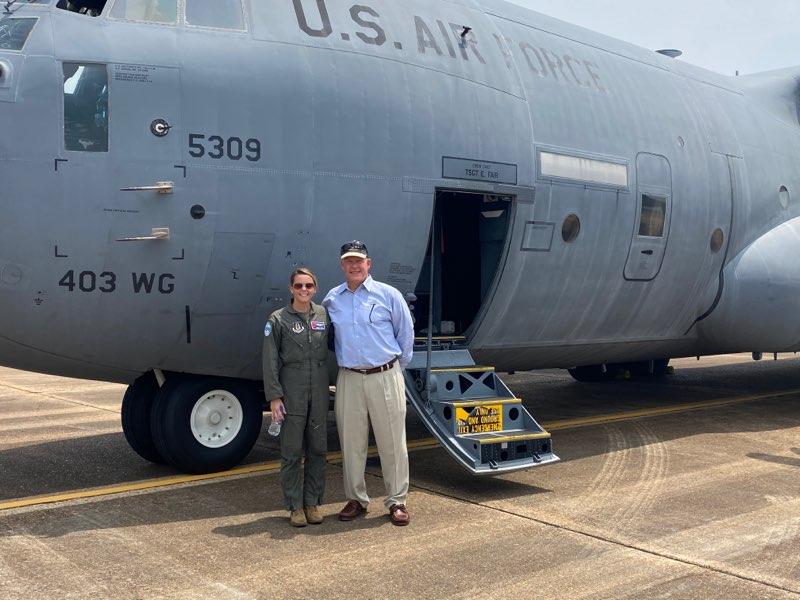
Ashley with Mark in front of a WC-130 Hurricane Hunters aircraft

Alumni

Ashley

Mark taught her to fly. Now she flies WC-130s with the 53rd Weather Reconnaissance Squadron — the Hurricane Hunters — right here on the Gulf Coast.

Cassidy in the cockpit of a C-17 Globemaster

Alumni

Cassidy

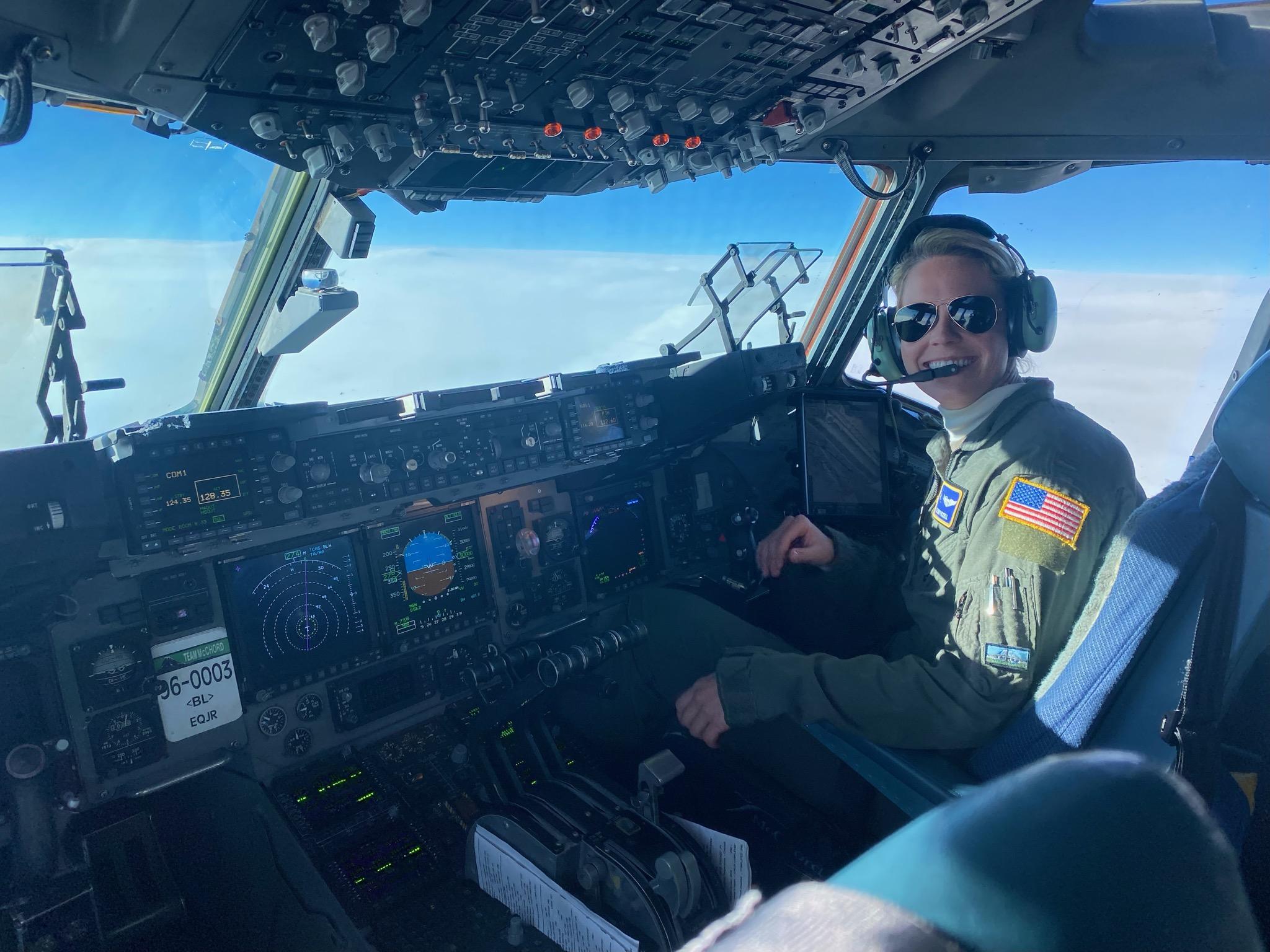
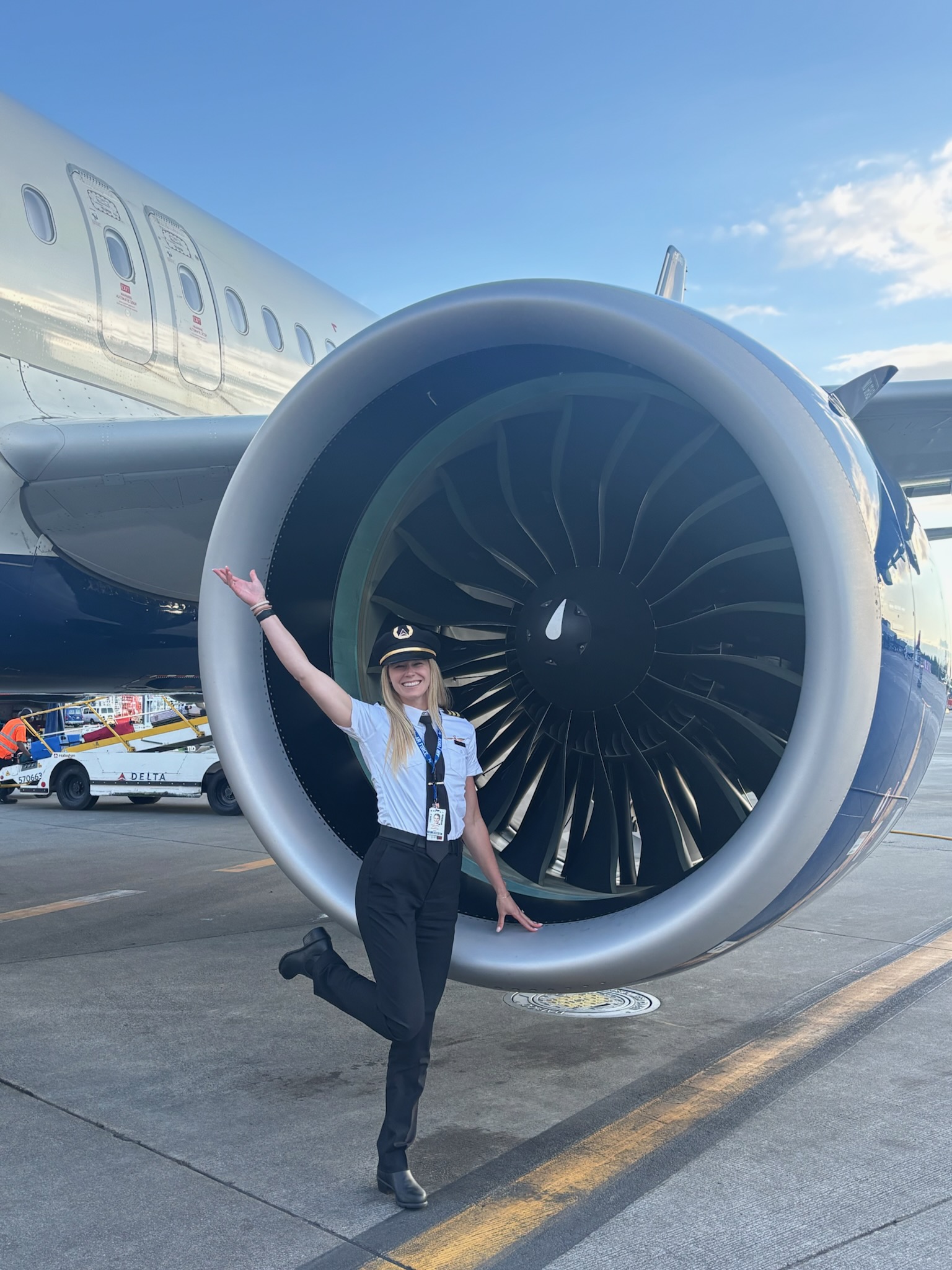
Started with Mark from the very beginning. Now flies C-17 Globemasters for the Air Force Reserve — and flies the A320 for Delta Air Lines.

Aubrey in United Airlines uniform

Alumni

Aubrey

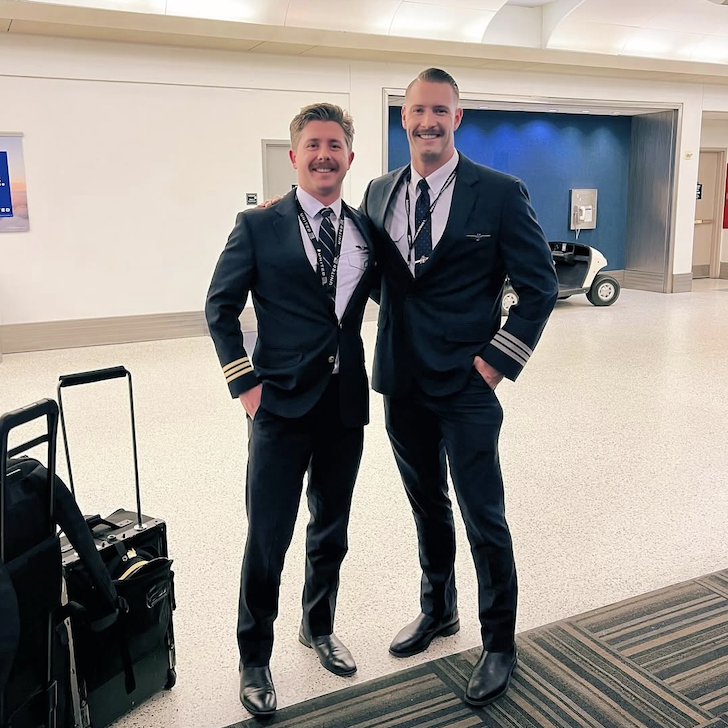
Mark trained him from the start. KC-135 Instructor Pilot in the Air Force Reserve — and First Officer on the 737 for United Airlines.

Leesa in the cockpit of a T-6 Texan II

Alumni

Leesa

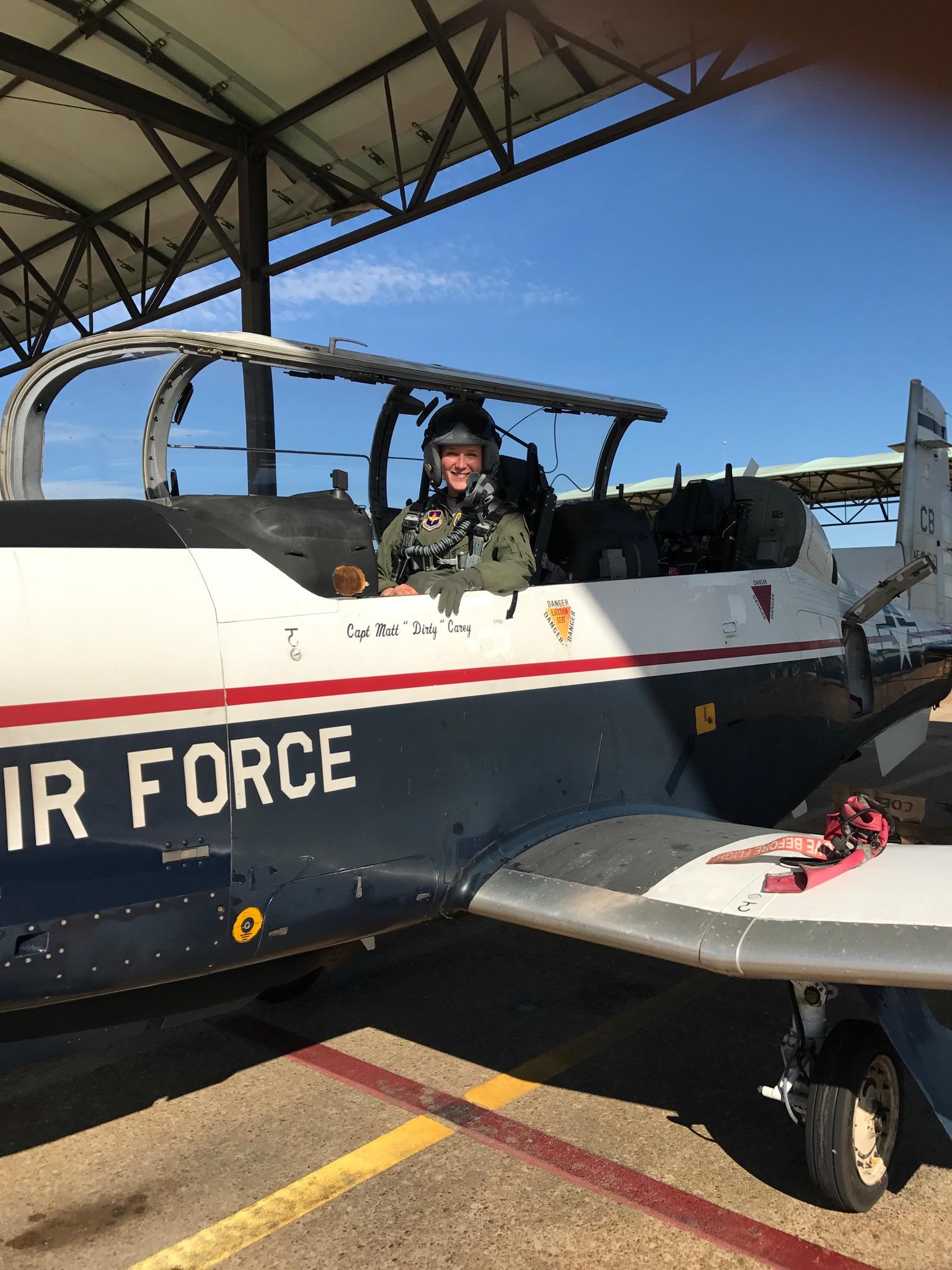
Trained with Mark, went through Air Force pilot training in the T-6 Texan II, and now flies C-130s — and 767s for Delta Air Lines.

Step by Step

Your Path from Student to Professional

Every aviation career starts with the same foundation. Here's how the certificates stack — and what each one unlocks.

1

Private Pilot Certificate (PPL)

The foundation. You'll learn to operate an aircraft safely in visual conditions — takeoffs, landings, navigation, emergency procedures, and weather decision-making. The FAA minimum is 40 hours; the national average runs 55–65. At CAVU, we don't count hours — we train to proficiency.

40 hrs FAA minimum · 55–65 hrs national average Est. $10,000–$14,000 Unlocks: fly yourself anywhere in the US
2

Instrument Rating (IR)

Learn to fly by reference to instruments alone — inside clouds, in low visibility, on IFR flight plans. The instrument rating transforms you from a fair-weather pilot into an all-weather one. Required for every professional aviation career and arguably the most valuable certificate after your private.

50 hrs cross-country PIC · 40 hrs instrument time Est. $8,000–$12,000 Unlocks: IFR flight, clouds, professional eligibility
3

Commercial Pilot Certificate (CPL)

The certificate that allows you to be compensated for flying. Commercial training raises the bar on precision — steep turns, chandelles, lazy eights, and a higher standard of aircraft control across the board. At 250 hours total time, you can legally fly for hire.

250 total hours · 100 hrs PIC · 50 hrs cross-country Est. $8,000–$14,000 (incremental) Unlocks: get paid to fly · 135 operations · CFI eligibility
4

Certified Flight Instructor (CFI / CFII)

Most career pilots pursue the CFI certificate after commercial to build hours toward ATP minimums while earning income. The process of learning to teach forces a deeper understanding of everything you already know. Add the CFII (instrument instructor) to maximize your earning potential and hour-building efficiency.

No additional flight hours required to test Est. $4,000–$7,000 Unlocks: teach students · build hours while earning
ATP

Airline Transport Pilot Certificate (ATP)

The top of the certificate ladder. Required to serve as pilot in command of any Part 121 air carrier aircraft. The standard route requires 1,500 total hours; an FAA-accredited aviation degree path reduces this to 1,000–1,250. The ATP written and practical are the most demanding tests in civilian aviation — and the most rewarding to pass.

1,500 hrs total · 1,000 hrs with aviation degree Most pilots reach this point via CFI hour-building Unlocks: airline captain · fractional · major carriers

Why It Matters Where You Train

What Serious Career Students Get at CAVU

Not all flight training is the same. The differences show up in how long it takes, how much it costs, and whether you actually come out prepared.

One Instructor, Start to Finish

You'll work with the same CFI throughout your training. No rebuilding trust, no starting over, no explaining your bad habits to a stranger for the seventh time. Consistency is how you train efficiently and build the habits that last.

Progress-Based Training

We track where you are, not just how many hours you've logged. A student who hasn't soloed after 30 hours doesn't need more hours — they need better instruction. We identify problems early and address them directly, before they become expensive habits.

Transparent Pricing

Our rates are published. You'll know exactly what each certificate costs before you commit to a single lesson. No surprise add-ons, no ambiguous hourly structures, no pressure to pre-pay for packages you don't understand yet.

Modern Avionics, Real-World Skills

Our glass-cockpit fleet uses the same Garmin avionics found in modern turboprops and light jets. The scan habits you build here translate directly to the professional equipment you'll fly later — not a steam-gauge mindset you'll have to unlearn.

Honest Career Guidance

We'll tell you the truth about each career path — the real pay, the real lifestyle, and the real tradeoffs. Our instructors have been there. Our goal is to match you with the right path for your life, not just sell you the next certificate on the stack.

Safety Habits That Stick

Airlines and corporate operators hire pilots with the right safety culture, not just the right hours. The habits you build as a student follow you for your entire career. We build them correctly from day one — because it's a lot harder to fix a bad habit at 500 hours than to form the right one at 5.

Mitchell, Allison, and Zane after completing their HP endorsement at Coast Aero Ventures

The CAVU Community

More Like a Flying Club Than a Factory

One of the things we work hardest at — and that nobody talks about — is building a real community among our students. Aviation is a small world, and the people you train alongside are going to be in it with you for a long time.

Students at CAVU know each other. They show up to watch each other's checkrides. They debrief together after cross-countries. They ask the person who soloed last month what it actually felt like. That kind of environment doesn't happen by accident — we make a point of fostering it.

When you're grinding toward 1,500 hours and there are days it feels like forever, having other people in the same position matters more than most students expect. A student who is connected to a community sticks with training. One who feels like just another number on a schedule often doesn't.

You're not signing up for a solo transaction. You're joining something.

Come Meet the Team

Ready to Start?

Let's Talk About Where You Want to Go

A 30-minute conversation with one of our instructors costs nothing. We'll talk through your goals, your timeline, and what a realistic path looks like — no pressure, no pitch.